
Planning for packing is critical when traveling to other countries. You need to know what luggage sizes are going to work everywhere you want your luggage to go by domestic flights, buses/trains/whatever. If you make a mistake here, it’s not the end of the world- it’s just possible to get hit with charges to check a bag and deal with collecting it.
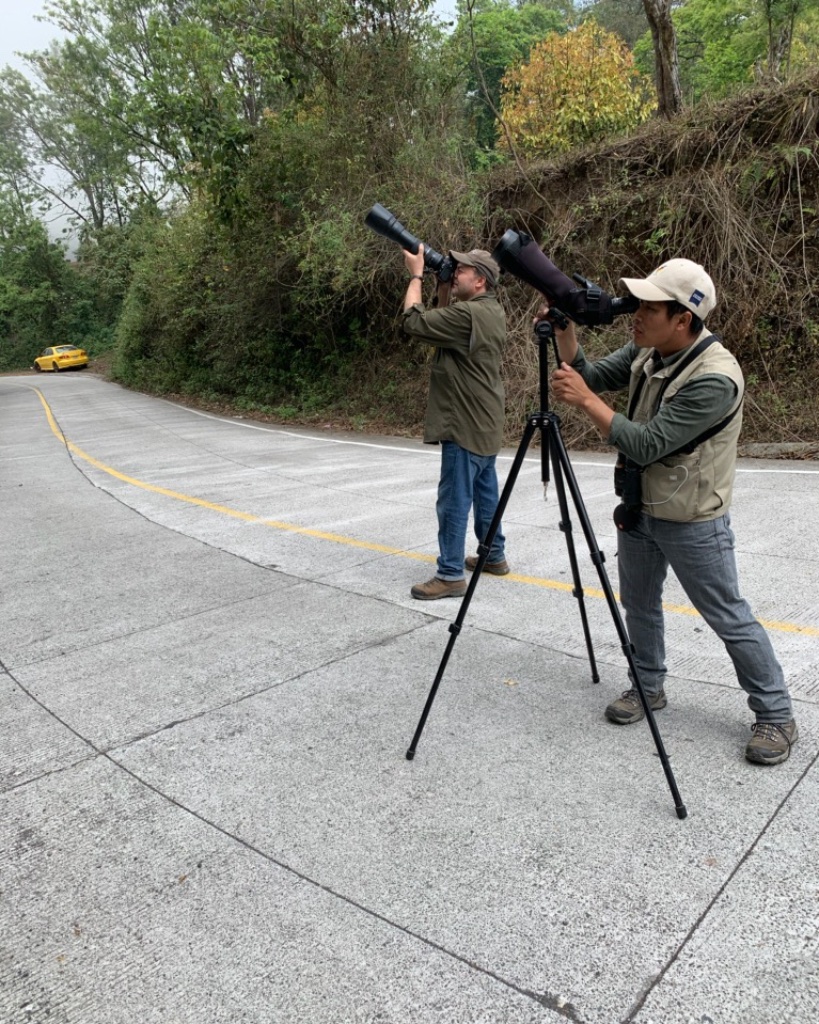
For us we have the big camera, a Nikon D500 with a few lenses including the big Tamron 150-600. That eats a bag. We use a large padded Think Tank Glass Limo case. It’s carried this lens and camera around four continents so far, kept everything safe and easy to access, and it’s easy to reconfigure when your gear changes. It also is 18 pounds with camera and lenses and eats one bag from our luggage. Sometimes I took the dictionary, phone, and bird field guide in the camera bag as well which put it around 20 lbs but lets me carry one bag for all my stuff.
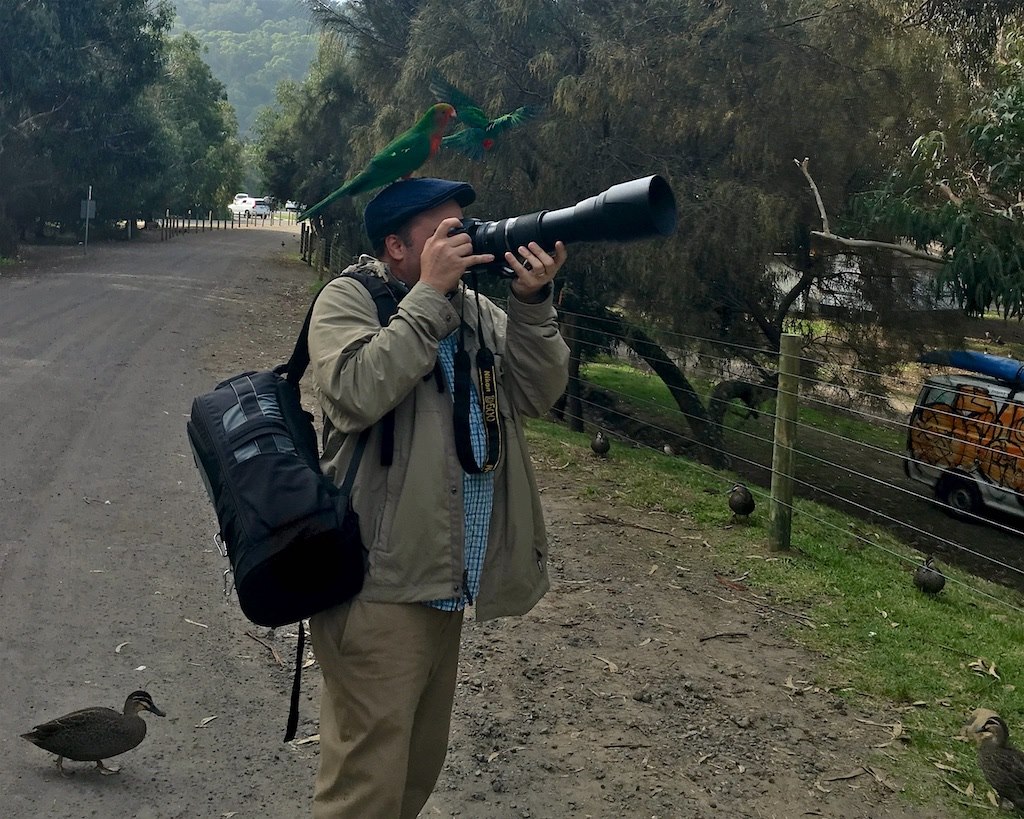
On top of the camera gear, we each packed one backpack with stuff we’d want on planes and trains and buses and things. Power cords go there, as do backup batteries for the phones/iPad, snacks, water bottles when possible, jackets/t-shirts, and sometimes umbrellas. This is also a good place for bug repellents.
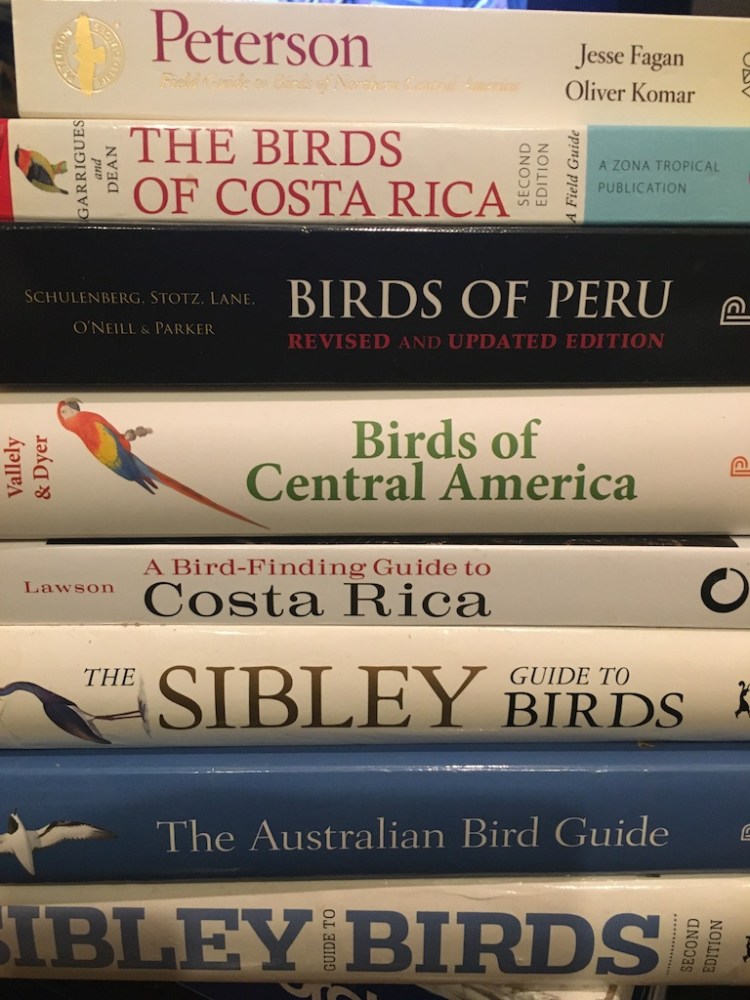
We bring paper bird field guides to new countries we visit. We read sections of interest in free time and use books for identification since they don’t need batteries or network. For this trip we got a used copy of Birds of Peru: Revised and Updated Edition, which is laid out nicely, has nice illustrations, and has nice clear region/range maps for each species.
We also packed Lonely Planet: Peru and Lonely Planet Latin American Spanish Phrasebook and Dictionary. No batteries and packed with useful material. It’s written by Brits, so they call eggplants aubergines and they always call cilantro ‘coriander’ but it’s very readable and in general it’s a solid phrasebook. The canned phrases in the phrasebook all seem idiomatic for what I hear and read in Latin America, I’ve gotten a lot of mileage out of it, and it’s helped. Good index. Nice food dictionary in the back as well as a compact en-es dictionary and es-en dictionary. This was critical for Peru since in much of the country few speak English.
Then we each had a suitcase. Because we had really expansive luggage allowances with one checked bag on Interjet, and the connecting LatAm flights, and could check bags on the long bus. Since we had a lot of suitcase capacity, we then overfilled with heavy clothes, fearing the cold. It mostly wasn’t very cold. Totally should have packed shorts.
Peru also isn’t a 110v system. They’re 220 like most of the world, but uses two/three-pronged plugs keyed like the US. So long as we could find the power supply/device saying it could handle 220 input, we took it with us and used it, and everything was fine. If we didn’t see support for 220 on a device we didn’t plug it in. iPhone chargers and most chargers in general are fine, so this really wound up being nbd. We made sure we had enough USB chargers for all our things using only two-prongers and we were fine, but we did stay at places with no grounded plugs. Good to be prepared to cope with the local power setup in new countries.
We also checked into water at this point. In Peru you don’t drink the tap water, but drink bottled/filtered water. You definitely want to know whether tap water is potable wherever you’re visiting. If the water isn’t potable, use bottled/filtered water religiously, brush your teeth with bottled water, and be careful.
Our extra luggage capacity had a cost – weight. We worried about the cold and were lugging around heavy useless clothes a lot. We could have slimmed down a lot more on clothes. In higher altitudes, the cost of luggage weight is higher. Altitude sickness hits right as you’re picking up your bags. The agony we experienced of lugging bags while our body was starved of oxygen hopefully will be a helpful reminder to pack light. As Aeschylus says, we learn through suffering.
The big takeaways are to pack as light as possible, make sure you check regulations all the way through your journey before you pack, check power, and pack as light as possible even if you’ve got some empty luggage capacity.
next: The Long Days of Travel
 The Nature Bloggist
One reply on “Packing and Prep”
[…] next: Packing and Prep […]
LikeLike